· Vag Health · 3 min read
“'It Only Happens After Sex' Why Post-Intimacy Vaginal Symptoms Are So Often Misunderstood"
It sends women in circles, yet "it only happens after sex" is one of the most commone, and most misunderstood, clues women share when describing vaginal symptoms.

While sex/intercourse/intimacy might often feel like the only trigger for vaginal symptoms, it’s actually not about the sex alone.
It’s about the vagina, and the body’s, resilience. Or lack of it.
When the vaginal environment doesn’t recover, its a really big indication. You see, the vaginal environment is designed to recover, its adaptive. After intimacy, the body reset’s the pH, restores the microbiome and settles any immune response. It does this with the help of hormones, immune system and more.
When this doesn’t happen, symptoms appear. It’s not the semen, the friction, the sensitivity or hygiene. All these factors may contribute in some way, it’s not generally the root cause when the symptoms are predictable, recurring and persistent.
More often, the underlying issue has more to do with reduced lactobacillus protection, altered immune signalling, hormonal changes and nervous system sensitisation. By not treating these, the cycle just keeps getting stuck.
The hormonal piece that changes everything
Oestrogen in particular plays a foundational role in vaginal health. It supports vaginal tissue, elasticity, glycogen production (essential for lactobacilli to flourish) and overall microbial stability. It also helps with the nervous system and immune response. As oestrogen fluctuates across the cycle, and particularly through perimenopause, the vaginal environment becomes more reactive, slower to recover and less buffered against normal challenges.
This explains why many women first notice post-intimacy symptoms in their late 30’s or early 40’s, especially after stopping hormonal contraception, during stressful times and alongside other subtle hormonal changes.
These symptoms aren’t random. They’re contextual.
when symptoms begin to shape behaviour
Over time women tend to quietly adapt.
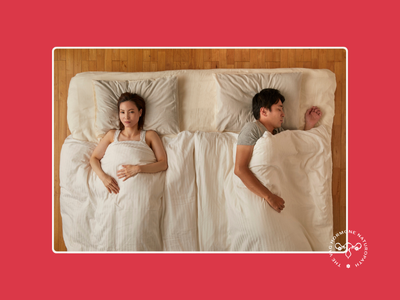
Avoiding sex, scheduling sex around symptoms, putting up with the symptoms to preserve closeness or might even disconnect from desire altogether.
What’s lost isn’t just physical comfort, its ease, confidence, safety in one’s own body. And yet, so many women are still told its “just something to manage”.
So instead of asking “why does this happen after sex?”, ask “why is recovery no longer happening”. This helps to reframe the symptoms from being a problem that just doesn’t go away, to explore information and better understanding to find a solution.
When hormonal patterns, microbiome resilience, immune load, and stress physiology are viewed together, the picture becomes clearer. This is what I do - take all these pieces and make the picture clearer, for you.
A quiet, steady path forward
Post intimacy symptoms aren’t a failure, they’re a signal that the vaginal ecosystem needs support, not suppression.
A Vag Hormone Assessment allows space to understand the hormonal and microbial factors that influence vaginal resilience. Without shame, without minimisation, and without guesswork.
When symptoms follow intimacy, the body isn’t rejecting closeness, it’s asking for capacity. Capacity can be rebuilt, gently, respectfully and with understanding.